
Your Local United Way is Here to Help!
Raising a child takes more than love. You need support, information, and access to the right resources at the right time. Whether you're navigating your baby's first milestones, preparing your preschooler for kindergarten, or helping a school-age child thrive, United Way Rock River Valley connects you to tools and services that make a real difference.
This page is for every parent, grandparent, foster caregiver, and guardian who shows up every day.
Free Events and Ideas
Looking for something fun and free? Check out these opportunities for families in Rock River Valley.
- Musical Storytime at Rockford Public Library
- Select Tuesdays, Thursday, and Saturdays from August 2026 through May 2027
- Preschool Power Storytime at Rockford Public Library
- Mondays: 10am-10:45am
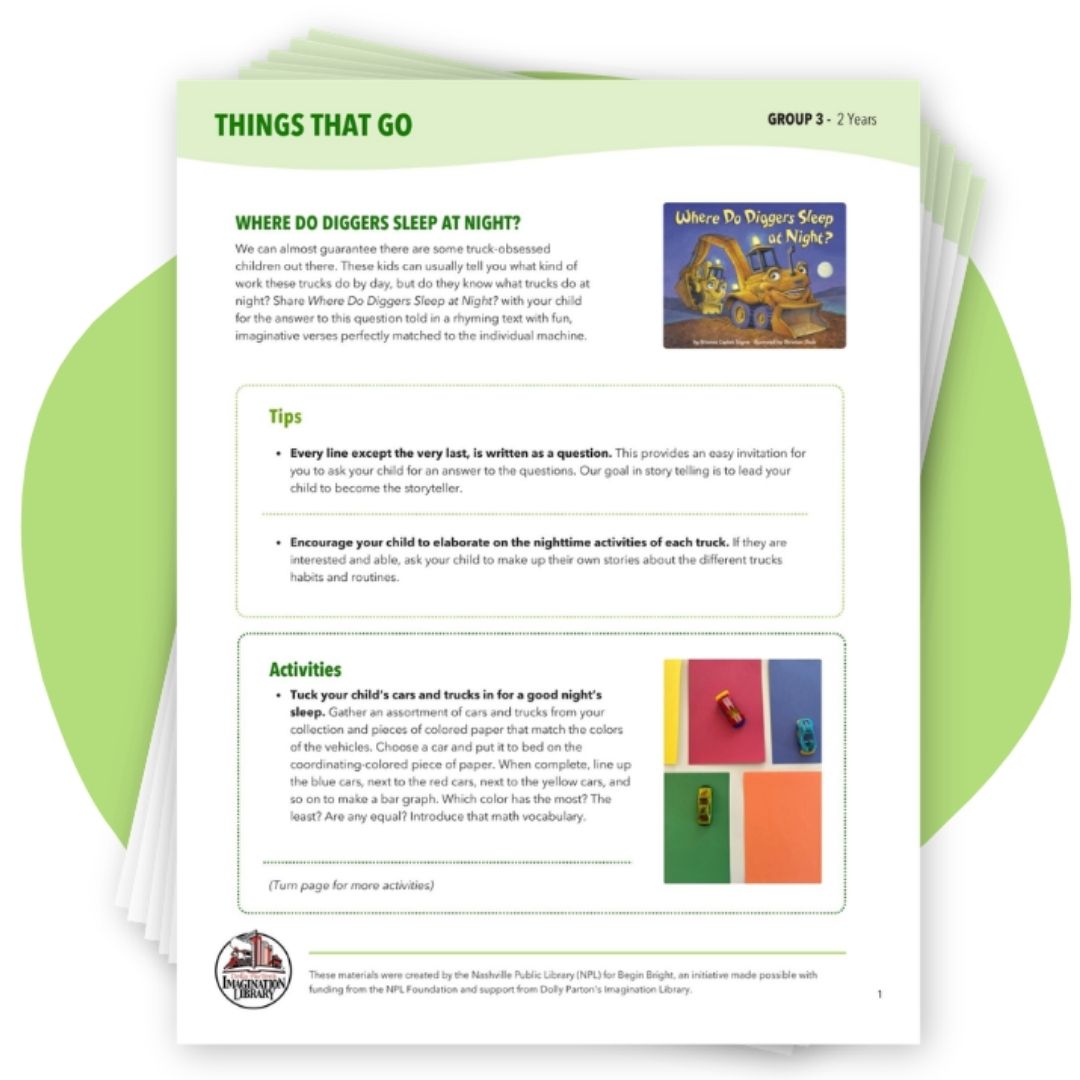
- Reading Tips (by age) from Dolly Parton's Imagination Library
- Science Saturdays at Wild Roots Nature Center (formerly Serverson Dells)
- First Saturday of each month from 10am-2pm
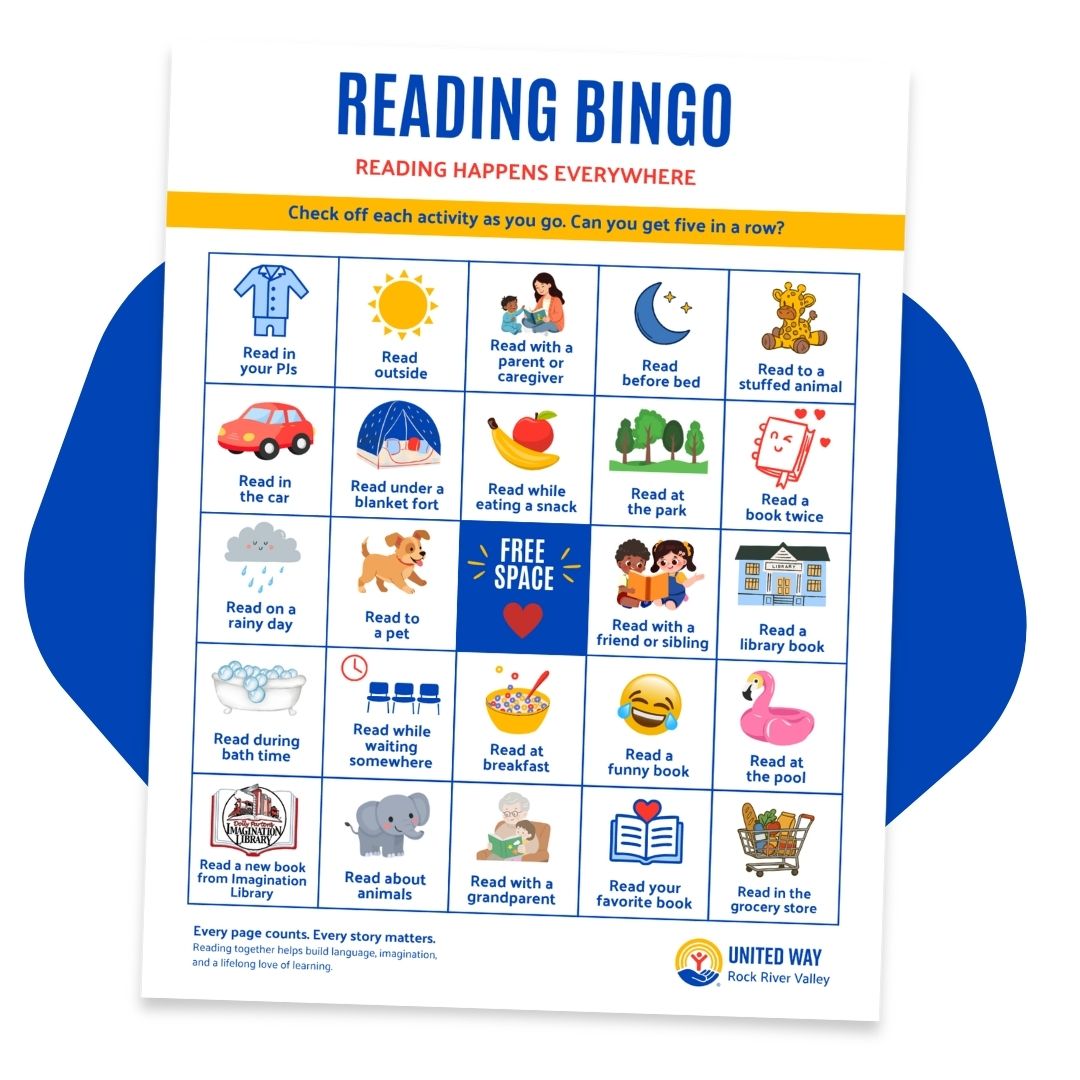
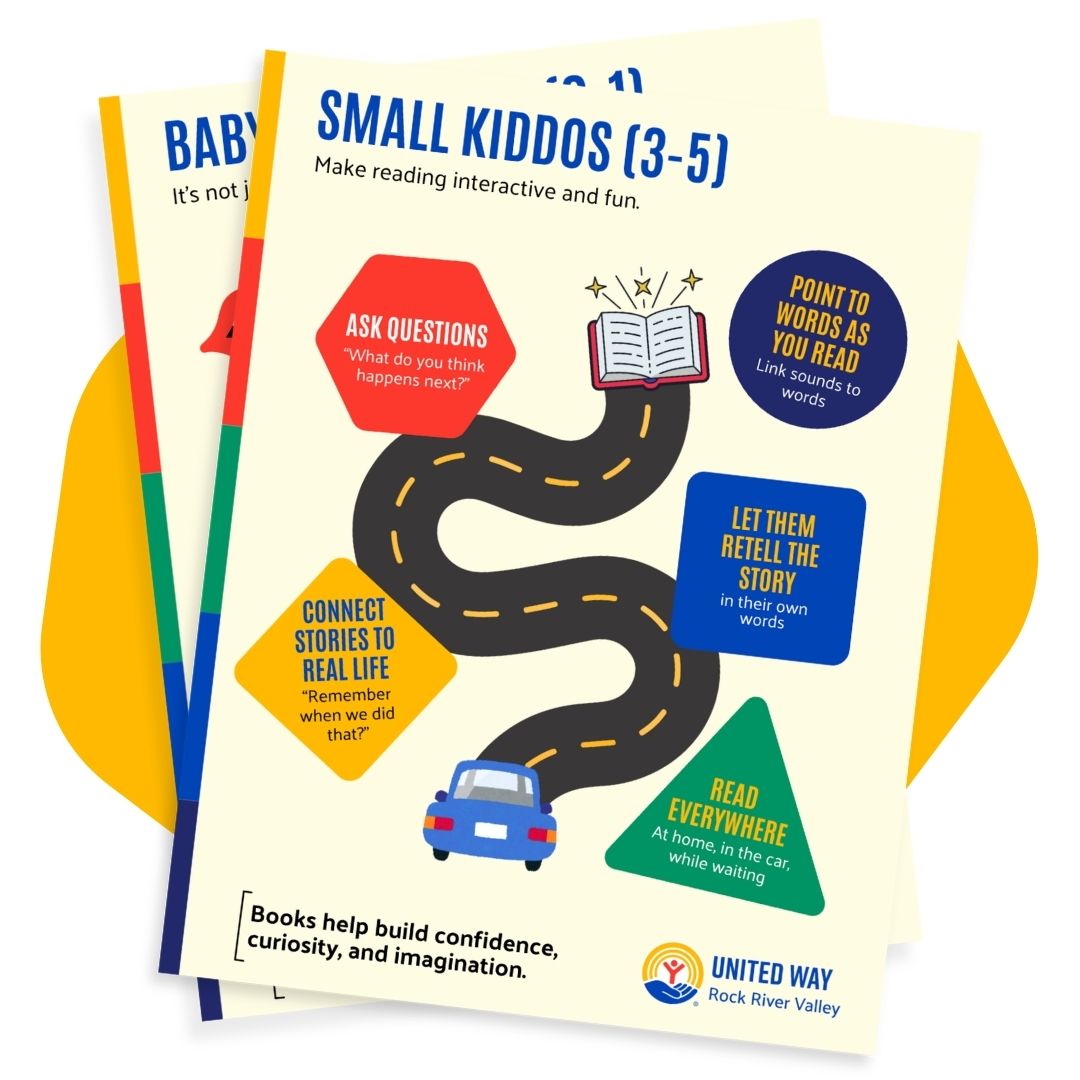
Printable Resources
Building a Strong Start (Ages 0–3)
The first three years of life are the most critical for brain development. What happens during this window shapes how children learn, communicate, and relate to others for the rest of their lives.
- Talk, sing, and read every day. Even before babies can respond, hearing your voice builds vocabulary and strengthens your bond.
- Follow your child's lead. When your baby points, looks, or reaches — respond. These back-and-forth moments are how early communication develops.
- Routines create safety. Consistent schedules for feeding, naps, and bedtime help young children feel secure and regulated.
- Trust your instincts. If something feels off with your child's development, ask your pediatrician. Early support is always better than waiting.
- You don't have to do this alone. Home visiting programs, parenting groups, and early intervention services exist specifically for families with young children. Ask your doctor or call 211 to find what's available near you.
Not sure if your child is hitting milestones? Trust your instincts and know that early support makes a bigger difference than waiting.
Ready to Learn, Ready to Grow (Ages 3–5)
Preschool isn't just about ABCs and counting. It's where children develop the social-emotional skills they'll carry into kindergarten and beyond — how to manage emotions, make friends, and solve problems.
- Read together every day. Fifteen minutes of shared reading builds vocabulary, comprehension, and a love of learning that lasts a lifetime.
- Name feelings out loud. Help your child build emotional vocabulary by saying things like "You seem frustrated" or "I can see you're excited." It teaches them to understand and manage their emotions.
- Play is learning. Building blocks, pretend play, and puzzles develop math thinking, creativity, and problem-solving — no worksheets required.
- Practice independence in small ways. Letting kids dress themselves, put away toys, or pour their own water builds confidence and self-regulation.
- Talk to your child about kindergarten. Visit the school, read books about starting school, and frame it as an exciting next step — not something to fear.
Reading aloud for just 15 minutes a day is one of the highest-impact things you can do for your child's future.
Supporting Learning at Home and at School (Ages 5–12)
Once kids are in school, the role of parents and caregivers doesn't shrink — it shifts. Staying connected, building routines, and knowing where to turn when challenges arise all matter.
- Create a consistent homework routine. Same time, same place. Predictability reduces resistance and helps kids transition into focus mode.
- Ask better questions than "How was school?" Try "What made you laugh today?" or "What was something hard?" to open real conversations.
- Stay connected to your child's teacher. You don't have to wait for a conference. A quick email or note at the start of the year sets a positive tone and keeps communication open.
- Watch for signs of stress or anxiety. Stomachaches before school, sleep trouble, and mood changes can all signal that a child needs more support. It's okay to ask for help.
- Limit screens, protect sleep. Kids ages 6–12 need 9–12 hours of sleep. Devices in bedrooms are one of the biggest barriers, and one of the easiest to change.
You Stepped Up. We've Got Your Back.
Grandparents, aunts, uncles, foster parents, and family friends who are raising children often face unique challenges and deserve dedicated support.
- You are not alone. Kinship caregivers are one of the fastest-growing caregiver groups in the country. Support groups, legal resources, and financial assistance programs exist specifically for you.
- Know your rights and options. Legal guardianship and kinship care arrangements vary — a local family services organization can help you understand what applies to your situation.
- Take care of yourself too. Caregiver burnout is real. Respite care programs give you a break so you can keep showing up for the child in your care.
- Children need honesty, not perfection. Kids in kinship care often carry complex emotions. You don't have to have all the answers — being present, consistent, and honest goes further than you think.
- Ask for help early. Call 211 to find local resources for kinship families, including food assistance, counseling, and financial support.
Not Sure Where to Start?
You don't have to figure this out alone. Call 211 — a free, confidential information line that connects Rock River Valley families to local resources 24 hours a day, 7 days a week.